The art of entertainment: why experience defines the new language of luxury weddings
For many years, the idea of a grand wedding was associated almost exclusively with visual opulence: extraordinary floral installations, crystal chandeliers, magnificent tablescapes and spectacular venues chosen to impress from the very first glance.
Beauty still matters
Impeccable design, exceptional craftsmanship and a strong visual identity remain fundamental to any truly sophisticated celebration.
But for today’s most discerning international couples, they are no longer enough. The meaning of luxury weddings has evolved.
True luxury is not simply found in what guests see when they enter a space.
It lies in what they feel throughout the celebration: the anticipation before a reveal, the natural rhythm of a dinner, the unexpected performance that changes the energy in the room and the sense of being carried effortlessly from one moment into the next.
At Infinity Weddings, we believe that décor creates the setting, but experience creates the memory.
This is why we approach every destination wedding as an immersive journey.
Music, lighting, entertainment, hospitality, timing and spatial movement are not separate elements. Together, they form the invisible architecture of the event: its flow.
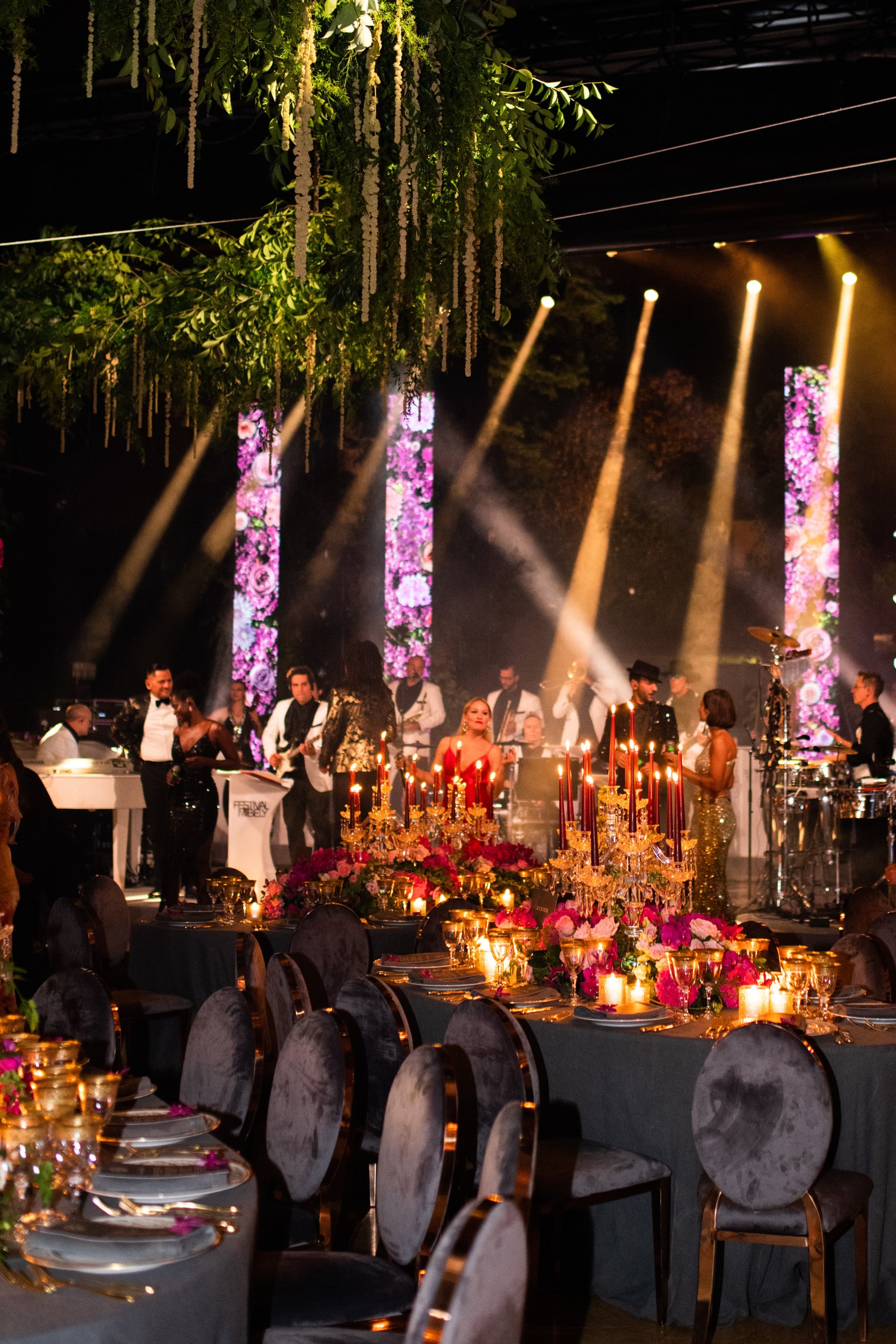
Entertainment is not simply a band or a DJ
One of the most common misconceptions in wedding planning is that wedding entertainment begins when an artist steps onto a stage.
In reality, entertainment begins much earlier.
It begins with the way guests arrive. With what they hear as they approach the ceremony. With the length of the aperitivo, the moment the doors open for dinner, the atmosphere created during the first course and the subtle shift in energy as the celebration moves towards the evening.
A remarkable band or internationally renowned DJ can certainly elevate a wedding. But even the most exceptional performer cannot, alone, create an unforgettable experience.
Luxury wedding entertainment must be part of a broader creative direction in which every element contributes to the rhythm of the celebration.
The question is not simply: “Who should perform?”
The more important questions are: “When should the energy change? What should guests feel at that precise moment? How should one chapter conclude and the next begin?”
This is where entertainment becomes an art form.
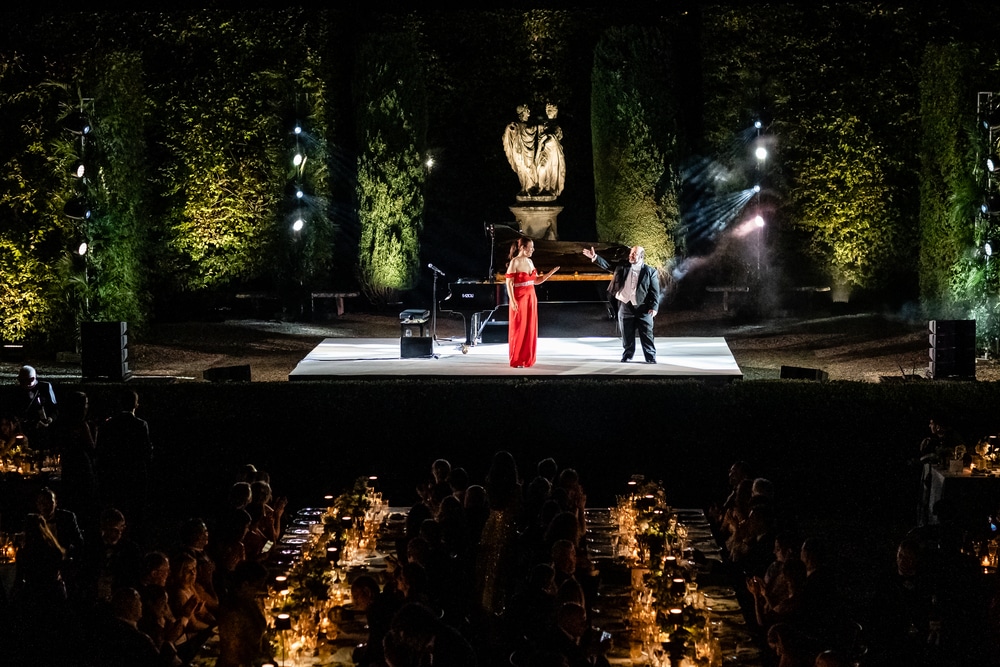
Designing the rhythm of a celebration
Every unforgettable wedding has a rhythm.
There are moments of anticipation and moments of release. Moments that invite conversation, others that create wonder and others still that bring every guest together in a shared emotional experience.
The rhythm must never feel rushed, but it must also never lose momentum.
A dinner that is too long can drain the energy from a room. A performance introduced at the wrong moment can interrupt rather than enhance the atmosphere.
Moving guests too frequently can make an event feel fragmented, while remaining in the same setting for too long can diminish the sense of discovery.
Creating flow therefore requires more than producing a timeline. A schedule tells us what happens and when. Flow determines how the event feels as it unfolds.
It involves understanding when guests need time to settle, when they are ready to be surprised and when the evening should change pace. It means coordinating the kitchen, service team, technical production, musicians, performers and lighting designers so that every transition appears completely natural.
Guests should never feel that they are being managed. They should simply feel that the evening is evolving around them, effortlessly.
That apparent effortlessness is one of the most sophisticated expressions of luxury wedding design and production.
Music as the emotional heartbeat
Music is among the most powerful tools available to us because it can transform the emotional temperature of a space almost instantly.
The music accompanying a ceremony should not merely fill the silence. It should heighten anticipation and reflect the setting, the couple and the emotional significance of the moment.
During an aperitivo, music can establish a sense of place.
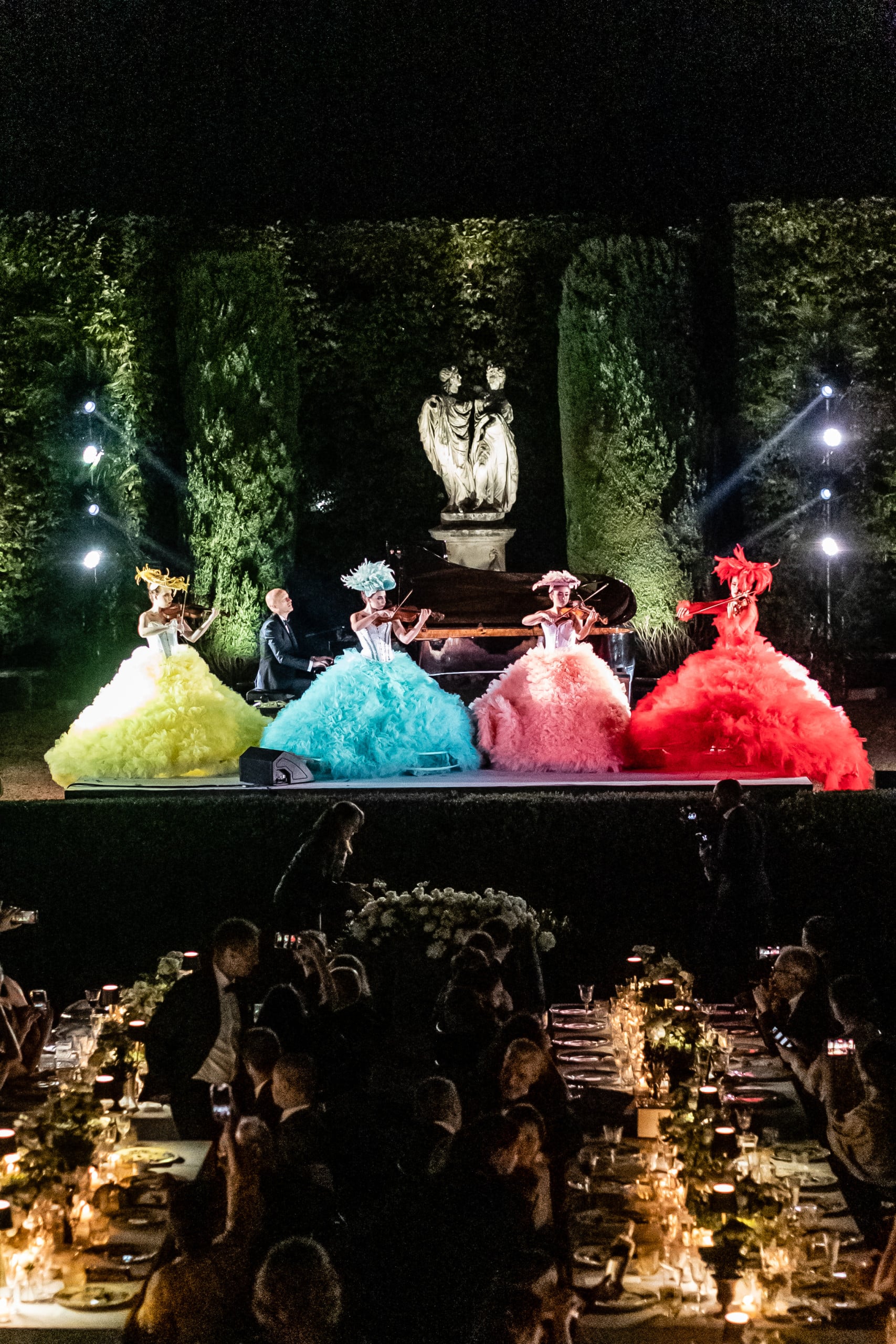
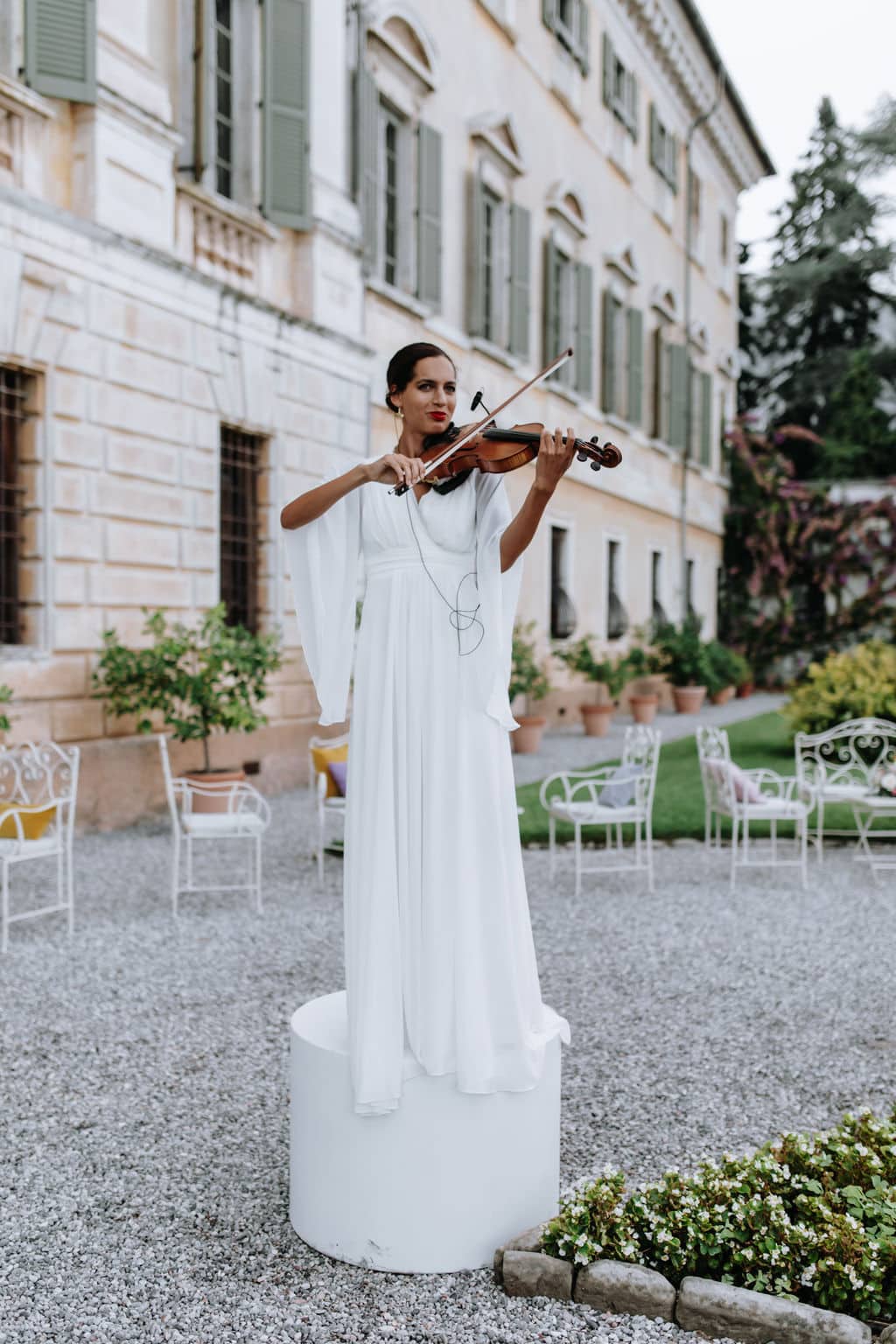
A contemporary string ensemble overlooking an Italian lake, a soulful vocalist in a historic garden or a refined jazz band on a Mediterranean terrace can create entirely different interpretations of Italian elegance.
For an Italian luxury wedding, music can also become an essential part of the destination experience, connecting the celebration to its setting while creating a distinctive emotional identity for the couple and their guests.
At dinner, music should support the experience without overwhelming it.
It can gradually become more present, introduce moments of interaction and prepare guests for what is to follow.
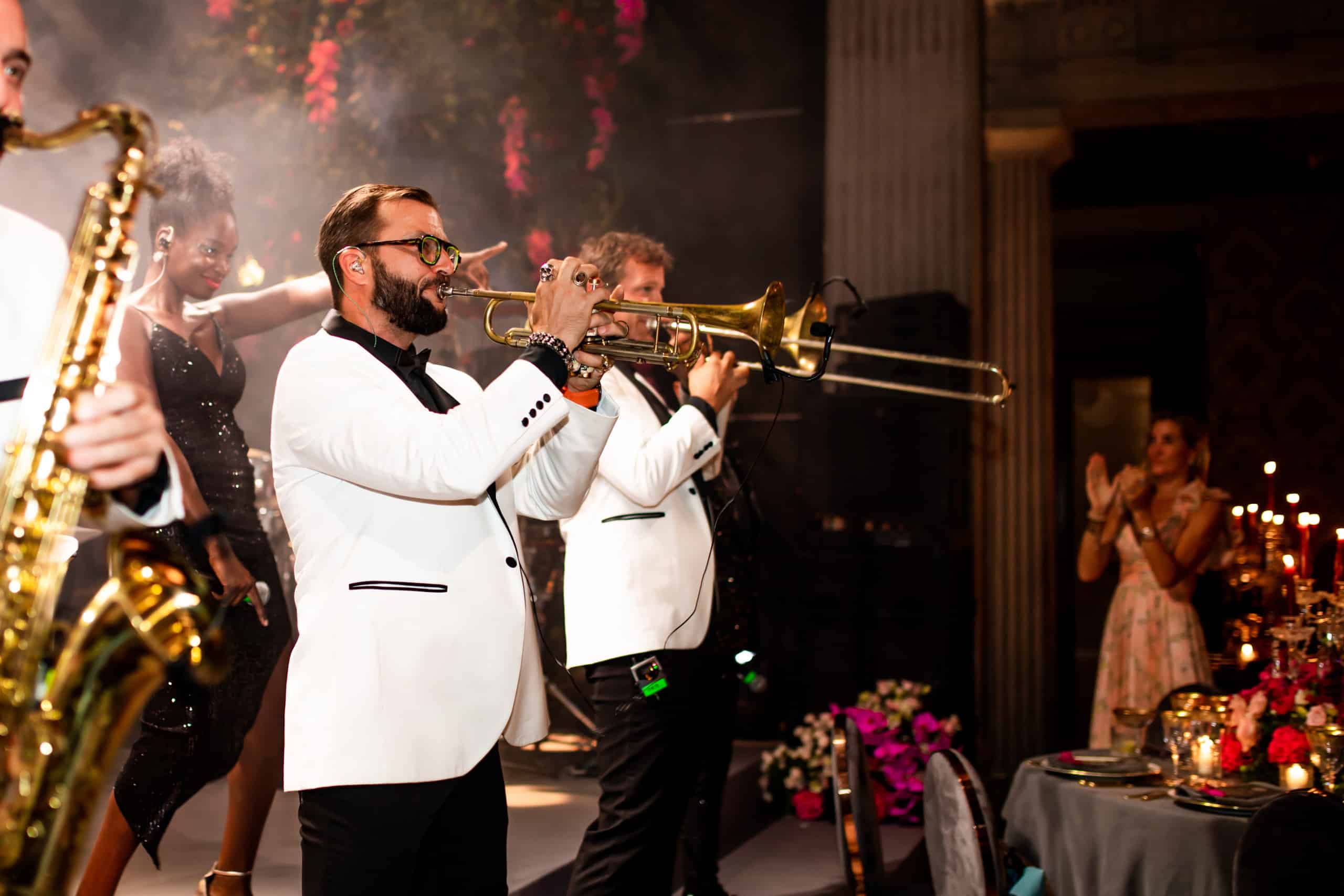
Later, live musicians, vocalists and DJs may come together, allowing the energy to build without a perceptible break between performance and party.
The choice of music is important, but its progression is even more so.
The most successful musical direction for a luxury wedding has its own narrative arc. It begins with emotion, evolves through atmosphere and ultimately creates a sense of collective freedom and celebration.
Lighting as a form of storytelling
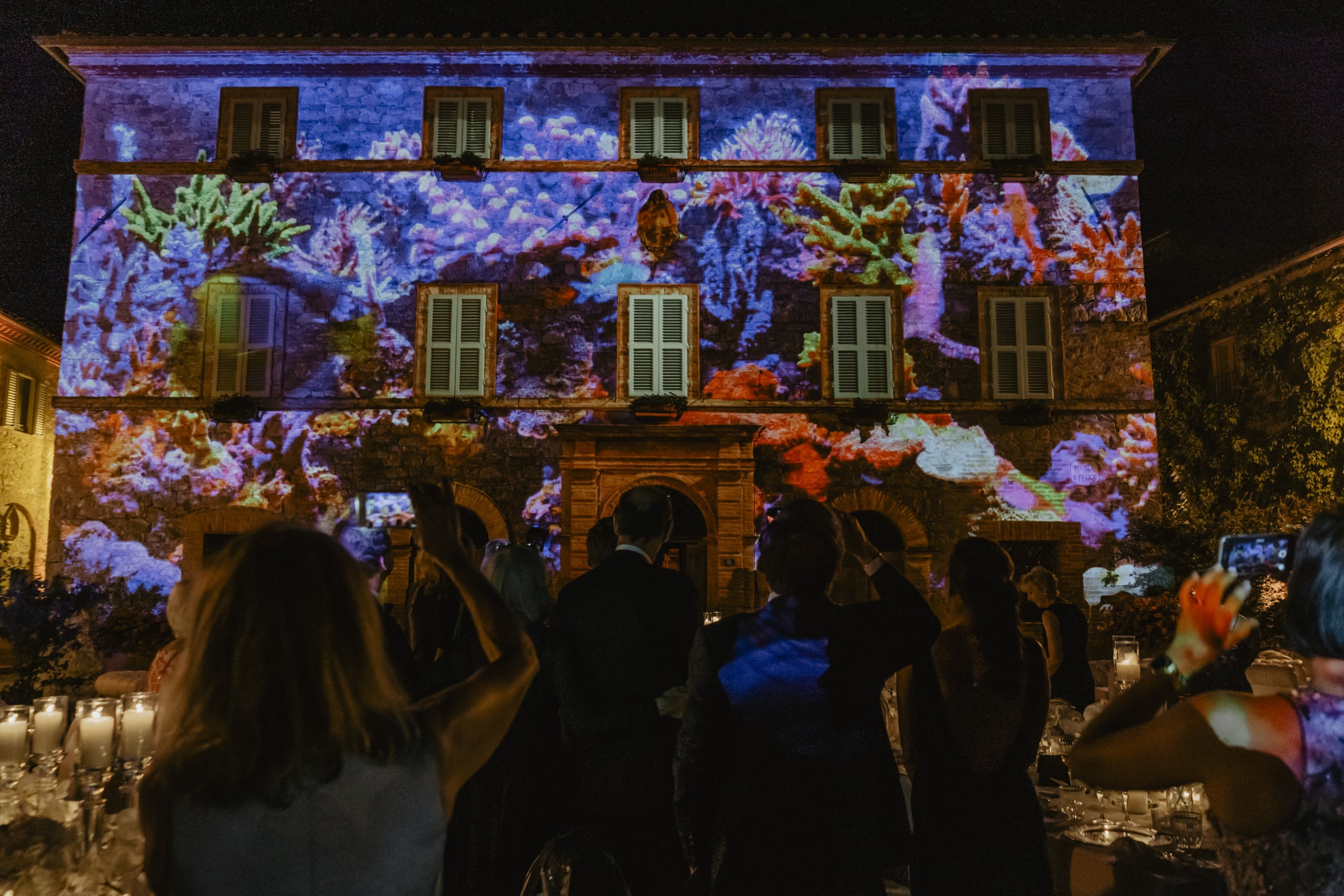
Lighting is a cinematic language, not simply a technical necessity or the final layer added to a design.
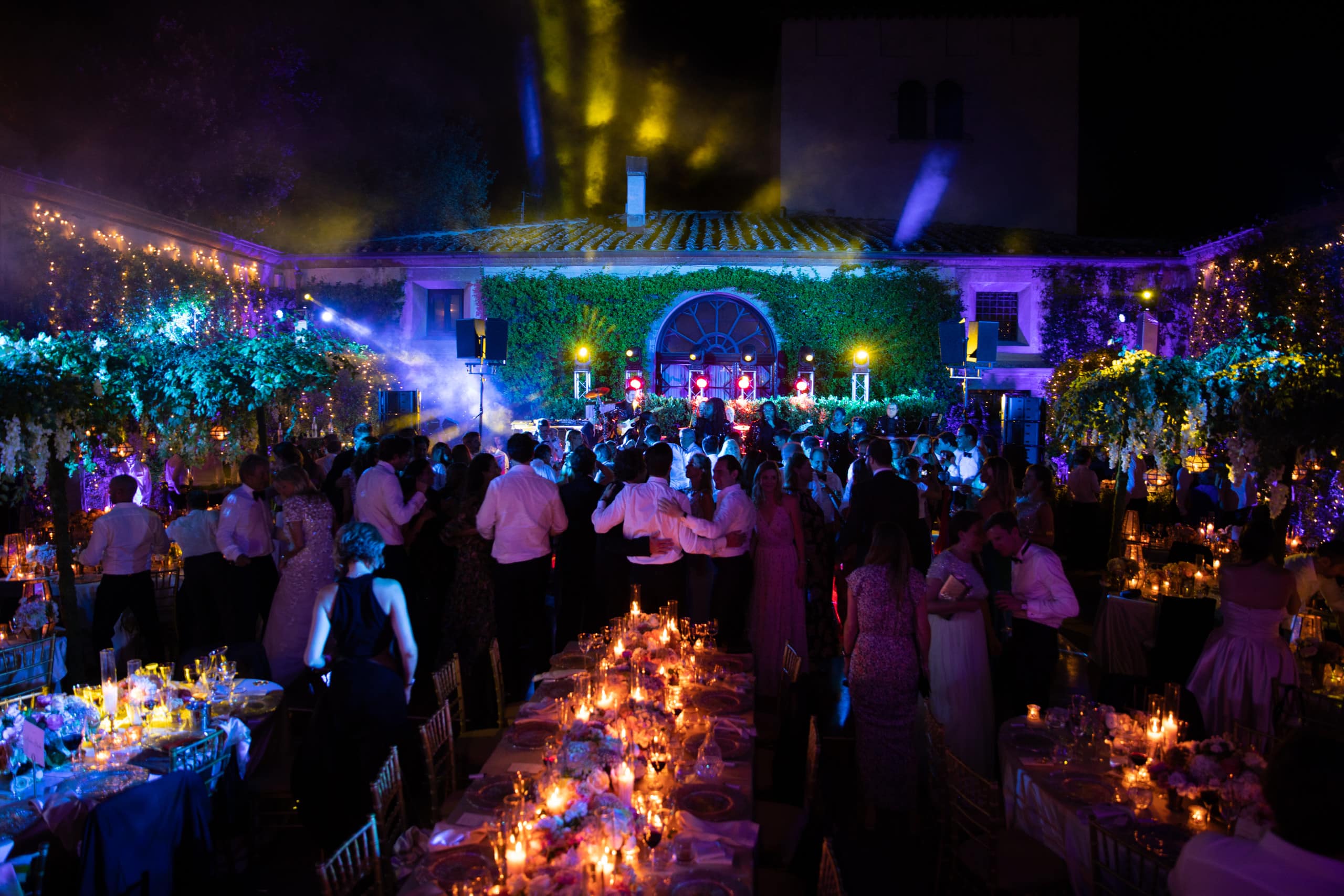
It reveals architecture, creates intimacy and directs attention without the need for explanation. It can make a centuries-old façade feel almost theatrical, transform an olive grove after sunset or allow a candlelit dinner to evolve into a completely different late-night environment.
Most importantly, lighting helps define transitions.
As daylight softens, the atmosphere can become warmer and more intimate. During dinner, individual architectural details may gradually emerge. When the pace changes, colour, movement and intensity can quietly signal that a new part of the celebration is about to begin.
Guests may not consciously notice each change, but they experience its effect.
This is precisely what sophisticated wedding production should achieve: the technical complexity remains invisible, while the emotion it creates feels immediate and instinctive.
The choreography of space
A multi-day destination wedding in Italy offers an extraordinary opportunity to create a series of distinct worlds.
A welcome evening might be relaxed, vibrant and rooted in the local culture. The wedding ceremony can feel intimate and emotionally suspended in time. Dinner may be elegant and sensorial, while the afterparty reveals an unexpected, more daring side of the couple. The following day can bring everyone back together in a completely different atmosphere.
Even within a single evening, movement between spaces can create discovery and anticipation. However, every transition must have a reason.
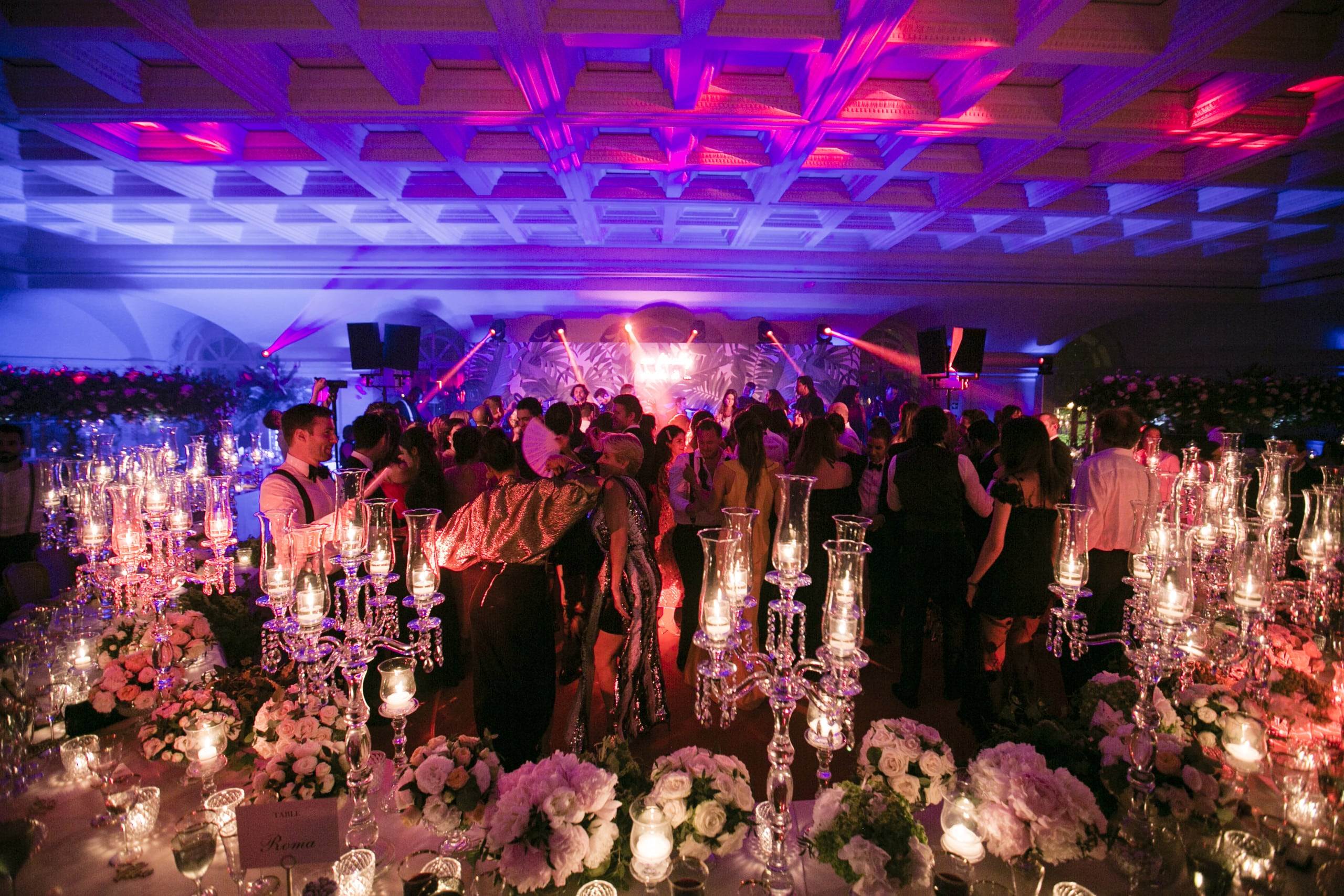
Guests might follow music towards a hidden courtyard, discover dinner through the opening of monumental doors or be drawn from a candlelit terrace into a dramatically transformed ballroom.
The movement should feel intuitive, never logistical.
For this reason, choosing a venue is not only about beauty or prestige. We study how its spaces connect, how guests will move through them, where energy can build and whether the architecture supports the desired progression of the event.
A beautiful venue provides the setting. The way it is experienced gives it meaning.
Surprise with purpose
Many international guests have already attended extraordinary celebrations, private concerts, gala dinners and events in some of the world’s most prestigious locations.
Impressing them through scale alone is increasingly difficult and often unnecessary.
Meaningful surprise is rarely about excess. It is about timing, originality and emotional relevance.
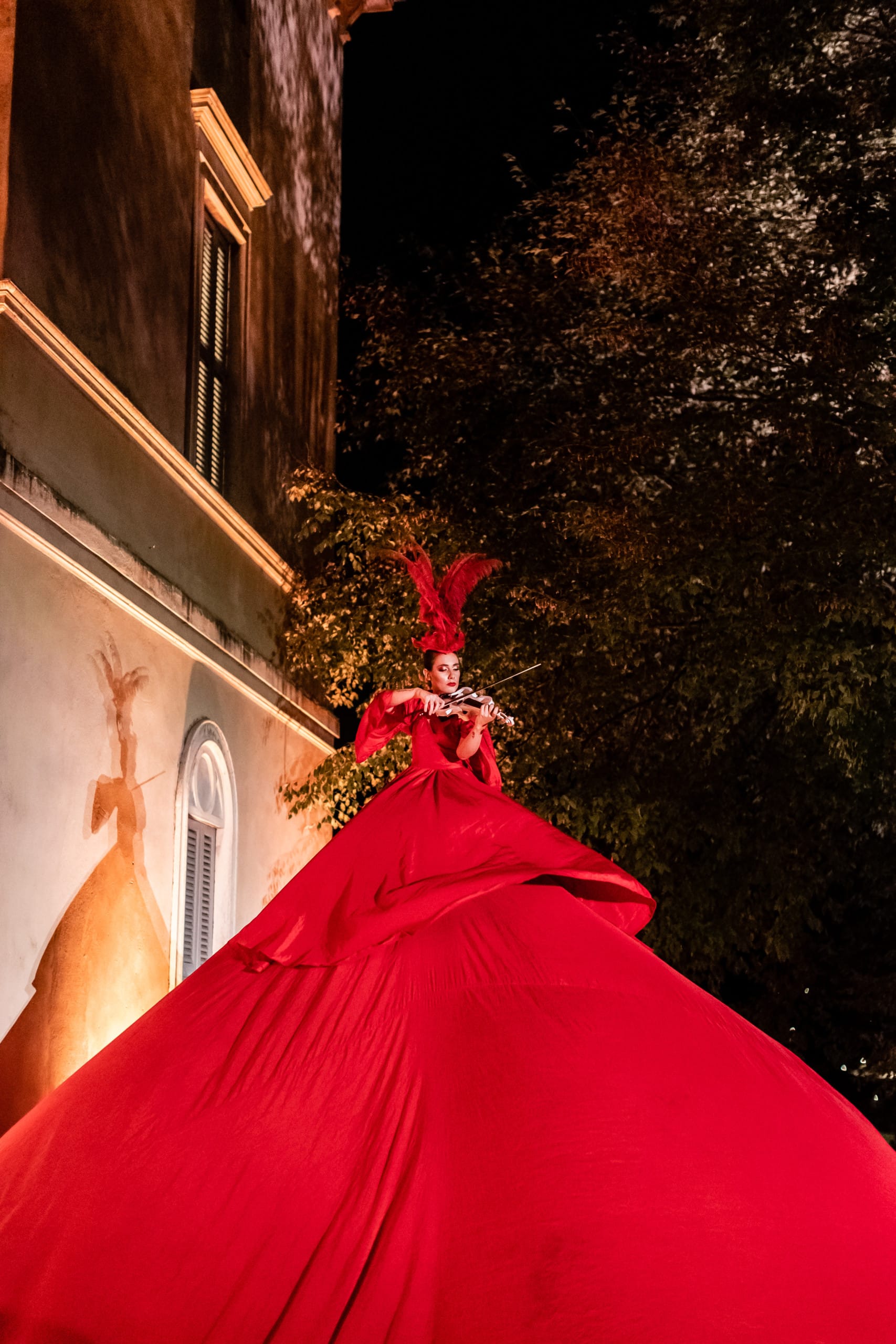
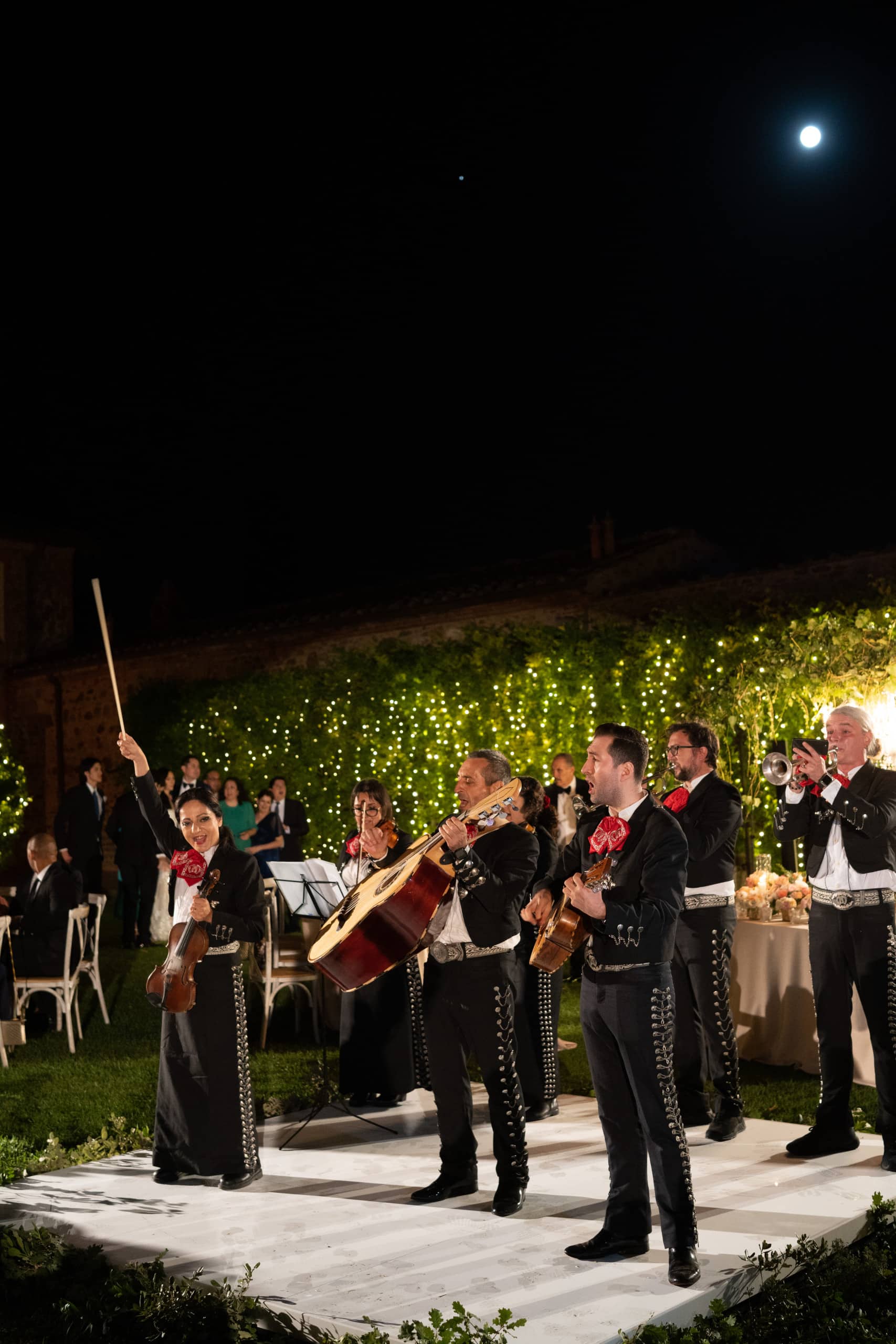
A singer may emerge unexpectedly during dinner. Musicians might appear on balconies overlooking a courtyard. A classical performance may evolve into something contemporary.
A quiet architectural space might be revealed as an entirely different world after dark.
But a surprise should never exist merely to fill a programme or demonstrate budget. It must belong to the story of the event.
The finest wedding entertainment feels inevitable once it happens, even though no one could have anticipated it.
Building the emotional crescendo
Every remarkable celebration needs a crescendo. It is the moment when space, sound, light and guest energy converge.
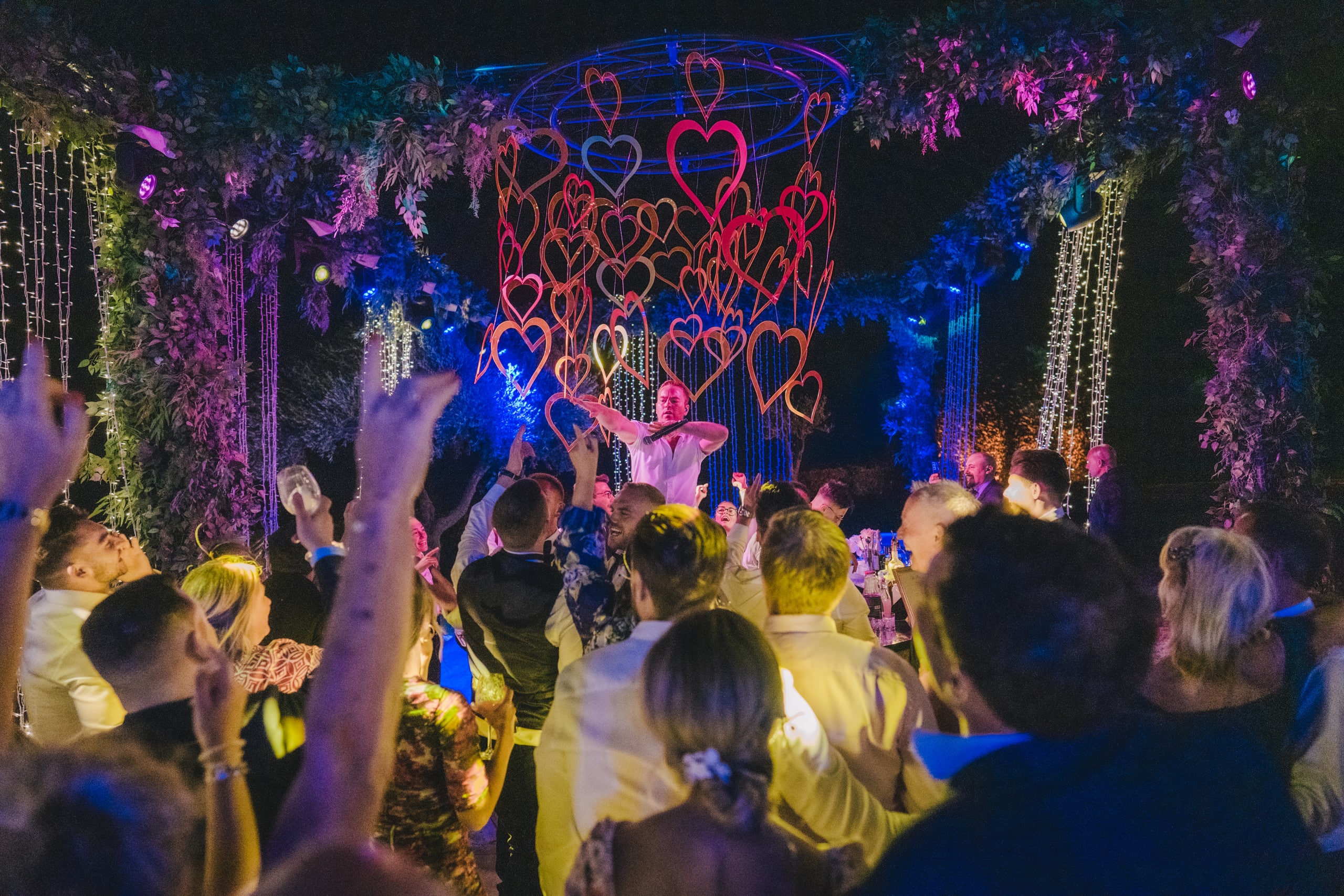
Sometimes it happens during an unexpected live performance. Sometimes it is the instant when a formal dinner transforms into a vibrant party. It may be created by a room reveal, a musical transition or the sudden realization that every generation is sharing the dance floor.
What matters is that the emotion has been allowed to build.
A celebration that begins at its highest intensity has nowhere to go. By contrast, an experience designed with confidence knows when to hold back. It leaves room for anticipation, contrast and discovery.
The pauses matter as much as the performances. Intimacy makes exhilaration more powerful. Restraint gives spectacle its meaning.
Experience is the new expression of luxury
After more than two decades of designing and producing destination weddings for international couples, we have learned that guests may admire what they see, but they remember how an event made them feel.
They remember being surprised.
They remember the music changing as the sun disappeared behind the landscape. They remember the warmth of a dinner that never felt too formal, the excitement of discovering an unexpected space and the energy of a dance floor that no one wanted to leave.
They remember the sense that everything happened naturally, even though every moment had been carefully considered.
This is the vision behind Infinity Weddings.
We create celebrations in which design, entertainment, hospitality and production speak the same language.
Our work is not simply to compose beautiful settings or assemble exceptional suppliers. It is to understand the emotional potential of every location, shape the rhythm of every event and direct all its elements as one cohesive experience.
For couples looking for an Italian luxury wedding, this philosophy means creating more than a beautiful celebration.
It means designing an immersive luxury destination wedding experience in which every detail has a purpose and every moment contributes to a memory that lasts long after the celebration ends.